Find the tools to support every child you serve. Start Here
NAVIGATION
New to First Book?
Join us to connect with thousands of fellow educators and access exciting educational events and resources for you and your students.
Find the tools to support every child you serve. Start Here
New to First Book?
Join us to connect with thousands of fellow educators and access exciting educational events and resources for you and your students.
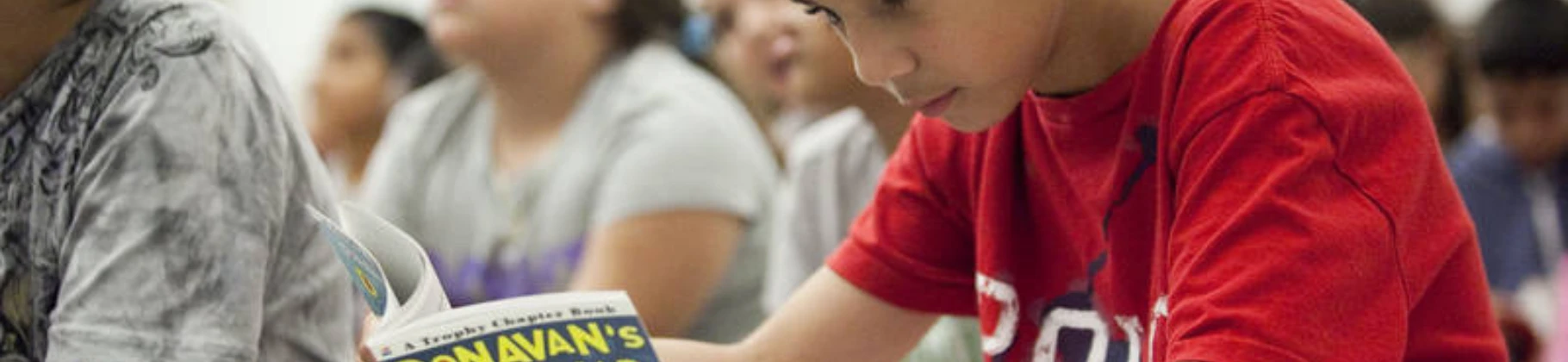
First Book partnered with literacy expert Susan Neuman to develop a new tool that provides educators with a resource to evaluate and improve the quality of their classroom libraries.
Per the National Center for Education Statistics (NCES), some 34 percent of students are below basic reading level in the fourth grade. If a lack of reading materials in US classrooms has a direct correlation to low literacy levels, how do educators know if their classroom libraries are robust enough to further their students’ academic success? Until now, educators have lacked a tool to guide and assess the quality of their classroom libraries. In response, First Book partnered with Susan Neuman, an early childhood literacy expert and researcher, to develop metrics to define literacy rich environments, answering the question — What does a literacy rich environment look like?
The goal of this research, including a literature review, field research, and a quantitative survey, was to field test the new tool with educators of children in low-income communities, identify ways to refine the checklist, and enable educators participating in the survey to evaluate their current classroom libraries to determine if they are literacy rich. The resulting tool, the Literacy Rich Classroom Library Checklist, is meant to guide the development and evaluation of classroom libraries, by identifying strengths and areas for improvement. This checklist helps individual educators to evaluate their own classroom libraries and advocate for additional resources for their students.
This guide contains a Literacy Rich Classroom Library Checklist to help educators assess their classroom libraries and can be used as an advocacy tool to ensure they have the resources they need to create a supportive and enriching environment for all students. Created in partnership with literacy researcher Susan Neuman, this resource highlights the various elements that make up a literacy rich classroom environment. First Book Network educators were also asked to review the guide and complete a survey to weigh in on the practical limitations of implementing some of the recommended elements. Their responses included modification suggestions as well as creative tips and tricks, which were all incorporated into the guide and checklist. After reviewing the Literacy Rich Classroom Library Checklist, the majority of educators, who previously rated their classroom libraries on a five-point scale, still rated them as a 3 or 4. However, ratings of 5 went down by eight percent, ratings of 2 went up by nine percent, and ratings of 1 went up by four percent. Overall, survey respondents considered the guide to be a helpful tool that enlightened them to many ways they can improve their own classroom libraries.
Using this resource, educators will learn:
Studies show that children are likely to read 50 to 60 percent more in classrooms with libraries than without them (Neuman, 1999). To achieve a baseline for the current state of literacy in US classrooms, between August 19, 2021, and September 8, 2021, First Book Research & Insights surveyed registered First Book members who work in Title I or Title I eligible classrooms regarding where children at their school can access books for independent reading. More than 1,200 educators replied to initial questions and 78 percent found the questionnaire very or extremely useful in terms of helping them understand what makes a library or reading area “literacy rich.” Fifty-one percent of educators reported that their classroom library/reading area would be considered a literacy rich environment across all areas of the checklist. Yet, the survey reveals that a full 30 percent of classroom libraries fall short of meeting the literacy rich guidelines and educators currently see no way to meet them. Fifty-four percent of educators report having 10 or fewer books per child in their classroom libraries.
There is a science to creating a classroom library, a set of characteristics and design features that may strongly influence whether or not the classroom library will be used to its full potential.Susan Neuman
We applaud the valiant efforts of educators who recognize it is essential to build a classroom library offering 10 – 20 books per student that reflect the unique stories of their students, and that it is central to overcoming the reading level gaps that students, particularly in low-income communities, are facing.Kyle Zimmer, First Book President & CEO
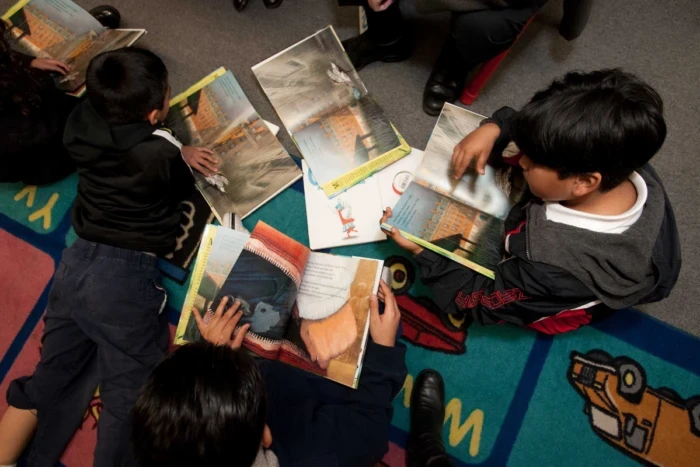
The First Book educators who responded to the survey reported having 100 – 300 books in their classroom libraries, compared to 54 percent of public-school teachers who report having fewer than 150 books in their classroom libraries, and 31 percent who report having fewer than 50 books.* The higher number of books reported by educators in this survey is likely due to the progress made by First Book in providing access to affordable books and funding opportunities to its registered First Book members. In response to this timely research, First Book has committed to funding 200 classroom libraries across the country to strengthen student access to high-quality books and support educators who have gone above and beyond to establish and fund the development of literacy rich environments.
*“Teacher & Principal School Report: Focus on Literacy,” Scholastic, 2016. www.scholastic.com/teacherprincipalreport
