We use cookies to keep our site secure, improve your experience, and understand how our content is used. You can accept all cookies or decline non-essential ones.
This post was written in collaboration with the Mind in the Making team.
As life begins to return to pre-pandemic days, more and more demands seem thrown our way—more appointments, events, commutes, and things on our to-do list. With our busier schedules come lots of pressures. Sometimes it’s hard to stay focused—and in particular, to focus on what we can control. We all need strategies for managing stress, staying on task, and exercising self-control. As we practice these strategies, whether it’s setting clear priorities, trying to eliminate distractions, or creating a time for ourselves when we regroup, we can see how the skill of focus and self-control can truly help us manage life these days.
And we see how it can help our children. Learning this skill when children are young will not only help them in the future—when they are our age—but will help them now.
But if it’s a challenge for us, it can be a big challenge for children! Does this parent sound familiar?
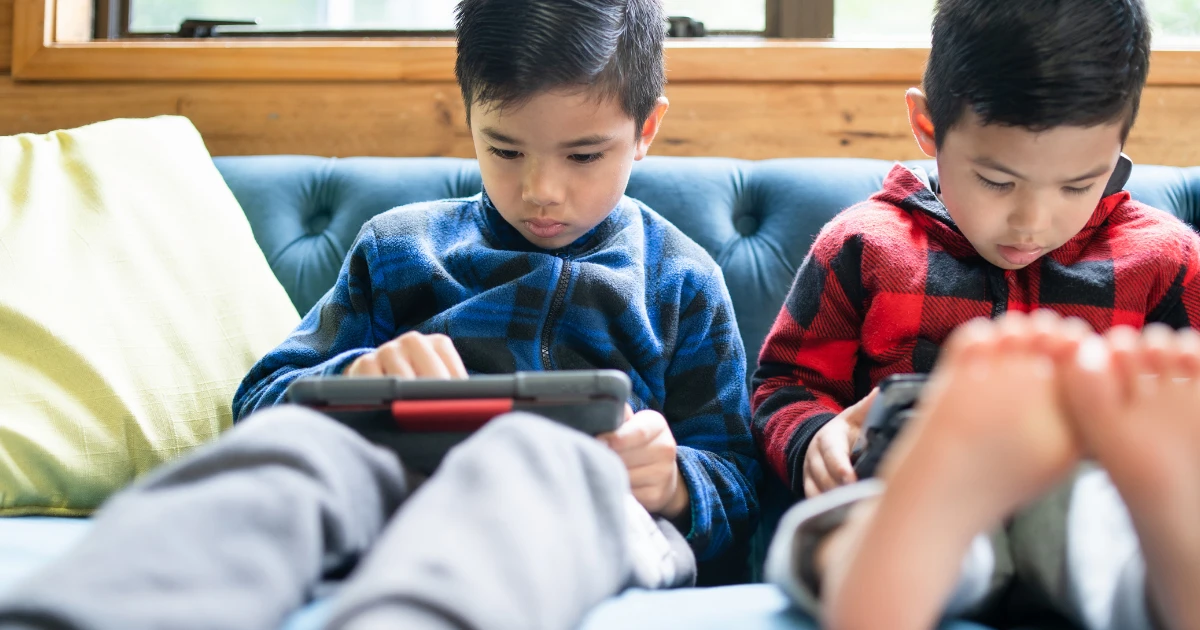
“In one ear and out the other” is a good description of what happens when I ask my son to do something. I have to repeat myself dozens of times. If he completes his homework, he forgets to turn it in! And there is the constant call for “just five more minutes!” of screen time that turns into 10, 15, or even 45 minutes! Basically, every day is a struggle to get him to listen.
Other parents of young children can relate. They know how it feels to face these moments and have them lead to no-win arguments,tantrums, bad moods, late arrivals, and all-around frustration. Parents and educators can helpreframe these challenging moments into learning opportunitiesusing the consistent application of research-based methods that teach children effective ways to recognize, process, and express difficult emotions.
Focus is a critical life skill, but it can be hard for many children—and adults—to learn. Most parents and caregivers find that as children learn focus and self-control, there are fewer screen time battles, more homework assignments completed (and handed in!), easier outings, and calmer bedtimes. But the benefits actually go beyond these moments in daily life.
Research confirms that children who take greater responsibility for how to focus and utilize self-control are more likely to learn from educational experiences. This can lead to a long-term impact on their well-being, and even their economic prosperity. Once parents and educators understand the importance of these skills—both in their own lives and in the lives of their children—they can address everyday challenges in ways that yield long-term results.
There is a lot of advice around on how to deal with tough moments. Ours is different:
Here are four difficult situations we heard repeatedly from parents and caregivers. In each of them, children can learn to focus on what they CAN control to better build focus and self-control:
If these sound familiar, you are not alone! The good news is that you can do this! You can handle challenging moments and get through them together with your child. And, if you try to see things in a new way, you can do even more—you can help your child develop critical life skills in the process!
These solutions are built around an “Opportunity Mindset.” This means choosing to see a challenge as a chance to grow. We know it’s not easy in a tough moment to see it as an opportunity, but the approach works at two levels. It helps you deal with the issue in the moment, and it helps your child build these critical skills over time. (It can also help you have a more positive parenting or caregiving experience!)
Helping children learn through this process allows them to develop skills that will deeply impact their connection with others and how they perceive the world. It has five steps:
By using this process, you are helping children learn to solve problems for themselves rather than fixing things for them.
First Book is collaborating with Ellen Galinsky and Erin Ramsey ofMind in the Makingat the Bezos Family Foundation to help educators and families with children ages 4-8 promote key life skills, such as self-control, communicating, and taking on challenges.
To help shape our work, First Book surveyed 2,500 of ourNetwork membersto identify the behavioral challenges they faced most frequently. Using the survey feedback and the science of learning and brain development, the Mind in the Making team created a series of skill-building opportunities tip sheets that we share with families and our network each week. These resources have been critical to supporting educators through the pandemic and its related stresses. Sign up to receive these free resources weekly in your inbox or via text message.